




















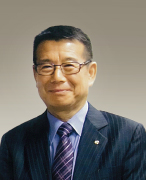
Announcement regarding the 5th Sapporo Conference for Palliative and Supportive Care in Cancer
Toward a New Era in Palliative Care in Cancer
The Sapporo Conference for Palliative and Supportive Care in Cancer (SCPSC), often referred to as the “Olympics of Palliative Care in Cancer,” will convene for its fifth meeting in July 2026.
Modern medicine has made remarkable advances in pursuing cure and life prolongation. At the same time, healthcare inevitably confronts a fundamental and inescapable reality: human beings are mortal. Palliative and supportive care in cancer seeks to understand and support patients and families living with this reality.
I have often stated that medicine is science, whereas healthcare is culture. Medicine has developed as a scientific discipline grounded in universality and reproducibility. In contrast, healthcare is practiced within diverse cultural contexts shaped by values, social structures, religion, history, and family relationships. Moreover, medicine itself is inherently interdisciplinary, comprising not only biological sciences but also psychology, sociology, and ethics as essential components of understanding human beings.
Palliative care represents a field that seeks to integrate medicine as science with healthcare as a cultural practice. While evidence-based clinical practice remains indispensable, palliative care places central importance on aspects of human experience that cannot be fully quantified, including suffering, meaning, relational existence, and spirituality. In this sense, palliative care is not merely a subspecialty of medicine but a domain that re-examines the very essence of healthcare under the premise of human finitude. It may therefore be regarded as reflecting the philosophical foundations of healthcare.
In recent years, research and practice in palliative care have reached a significant turning point. One direction focuses on disease-specific palliative care, characterized by advanced scientific specialization. The other direction emphasizes comprehensive palliative care that addresses suffering across all diseases, shaped by national healthcare systems, social contexts, institutional philosophies, and historical developments. These approaches should not be viewed as competing models, but rather as complementary perspectives that enrich the evolution of global palliative care.
The scientific program of the 5th SCPSC reflects this historical transition. In addition to cutting-edge discussions in palliative oncology and psychosocial oncology, the conference includes educational sessions exploring spirituality from comparative cultural perspectives, as well as special lectures examining the relationship between medicine, history, and ethics. These components embody the SCPSC commitment to integrating scientific inquiry with cultural understanding.
Sapporo, the host city of SCPSC, is not merely a geographical venue. It is home to a distinctive academic heritage rooted in the Sapporo Agricultural College founded in the nineteenth century. This intellectual tradition emphasized scholarship as a moral and humanistic practice grounded in integrity and conscience. Such a tradition resonates deeply with the philosophy of palliative care, which seeks to understand life and death through a holistic and human-centered perspective.
SCPSC provides a unique international forum where leading researchers and clinicians engage not in competition but in dialogue and co-creation. We hope that the discussions fostered at this conference will contribute not only to oncology but also to the broader future of global healthcare.
We warmly welcome participants from palliative oncology, psychosocial oncology, and all healthcare disciplines devoted to the care of patients facing serious illness.
Kunihiko Ishitani, MD
President, International Research Society of the SCPSC
President, Higashi Sapporo Hospital
February 12, 2026


The International Research Society of the Sapporo Conference
for Palliative and Supportive Care in Cancer



- Higashi Sapporo Hospital
- 3-3-7-35, Higashi Sapporo, Shiroishi-ku,
Sapporo, 003-8585 Japan - TEL: +81-11-812-2311 FAX: +81-11-823-9552
- E -mail:office@sapporoconference.com
- URL:http://www.hsh.or.jp


